Keynotes
From Power Delivery to Heat Dissipation: Materials Challenges for Scaled Electronics / Sep. 16, 2026
Bernd Gotsmann, IBM Research
Bernd Gotsmann is a Principal Research Scientist at IBM Research. He is manager of the Physics and Science of Information group in the Science of Quantum and Information Technology department at IBM Research – Zurich. Currently, his research is focused on the mechanisms of thermal transport on the nanoscale and materials for CMOS, including topological semimetals for interconnects. Bernd Gotsmann studied Physics at the University of Muenster, Germany, and the University of York, UK. After receiving his PhD he joined IBM in 2001 as a postdoctoral fellow and became a Research Staff Member in 2006. Since then he has worked on a range of topics including thermoelectricity, tribology, molecular electronics and nanomechanics.
Abstract
Computing demands are growing at an unprecedented rate, raising serious concerns about the long-term sustainability of current technologies. Continued progress requires major innovations in microelectronic fabrication and design. As transistors and interconnect dimensions shrink, power delivery and signal transport increasingly limit performance, calling for new architectural solutions. At the same time, rising power densities make heat dissipation a critical challenge across all length scales of computing, from data centers down to individual nanometer-scale transistors.
After reviewing selected advances such as backside power delivery and transistor stacking, we focus on key materials-science challenges. One major challenge is the identification of alternatives to copper interconnects that reduce energy dissipation during signal transmission. Another is the development of materials and device architectures that enhance thermal transport within the CMOS device layer. Addressing these questions requires advanced characterization techniques capable of probing micro- and nanoscale structures and their interfaces. We will discuss several such methods, including MEMS-based measurement platforms, self-sensing test structures, and scanning thermal microscopy, and present examples of recent progress enabled by these approaches.

Bernd Gotsmann
The Power of Light – Hot Stuff / Sep. 17, 2026
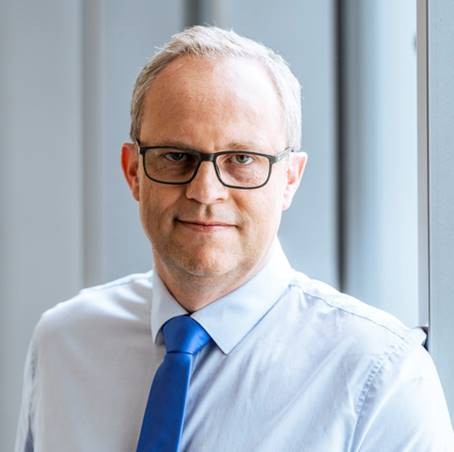
Stefan Groetsch, ams-OSRAM International GmbH
Stefan Groetsch is Senior Director of Hard- & Software Development at ams-OSRAM International GmbH within the Automotive System Solution Engineering division. He leads the embedded hardware and software team and is a key expert in automotive system architecture and application engineering. With more than 30 years of experience in the semiconductor industry and over 100 patent families, he has managed major projects including μAFS, the OSRAM OSTAR platform, and high-power laser diodes. In 2024, he was awarded the Deutscher Zukunftspreis by the President of Germany.
Abstract
As opto-semiconductors reach extreme power densities, brightness is increasingly constrained by thermal management. Whether in high-power laser diodes used in multi-kW YAG lasers, LEDs for video projection where micro displays impose size limits, or novel pixelated automotive LED headlamps, the same rule applies: Performance depends on the efficiency of the heat path.
This keynote highlights real-world applications in which physics sets clear limits—where more light inevitably means more heat, and where thermal design determines the difference between breakthrough and failure.
Across these domains, one conclusion is unavoidable: if we want more powerful optical systems, thermal management must be treated as a core design priority.
Stefan Groetsch
Packaging Technology – A Future Enabler for AI, Automotive, and IoT / Sep. 18, 2026
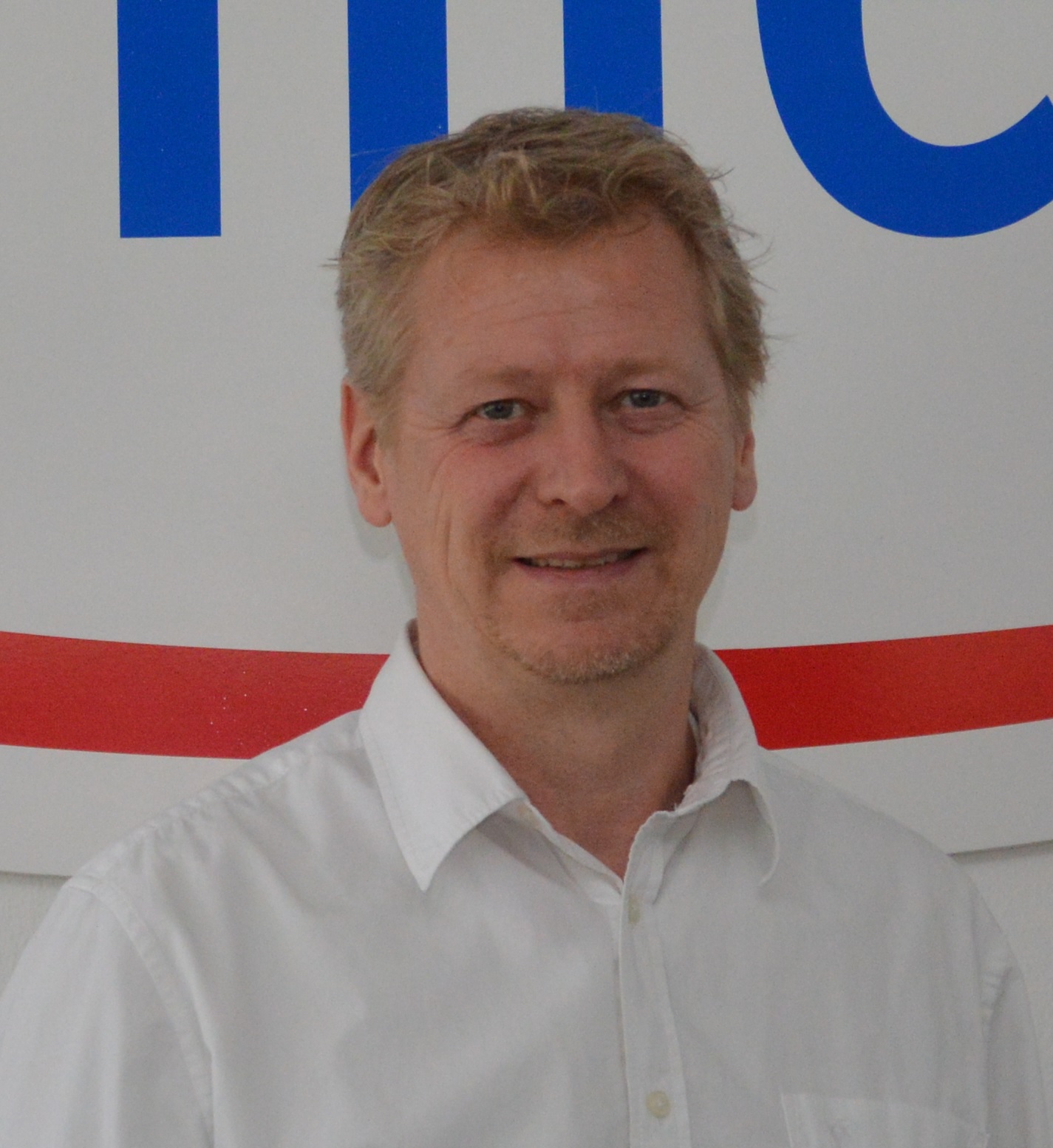
Thorsten Meyer, Infineon Technologies
Thorsten Meyer is Distinguished Engineer for Package Concept Engineering at Infineon Technologies in Regensburg, Germany, responsible for New Package concepts. Before, he was leading the Package Technology and Innovation department at Intel Mobile Communications (IMC) in Regensburg and earlier was overall project leader for the development of Wafer Level Packaging Technologies at Infineon in Regensburg. Thorsten is author of multiple publications and holds more than 200 patents and patent applications in the area of advanced packaging.
Abstract
The acceleration of artificial intelligence and its power supply, the electrification of mobility, and the expansion of the Internet of Things (IoT) are driving a fundamental increase in power density across modern electronic systems. As a result, thermal management addressed by package technology has become a key enabler of performance, efficiency, and reliability. This presentation will discuss challenges and solutions in system integration, and advanced packaging for different applications in the semiconductor industry.
Thorsten Meyer