Short Courses
Applied Statistics for Experimentalists | September 15, 2026, 9.00 am – 5.00 pm
The validity of conclusions drawn from experimental research depends not only on a brilliant theoretical framework and meticulous experimentation, but also on reliable measurement set ups and correct application of the relevant statistics. In short – how good is the evidence that your input, your treatment, your design makes a difference? And if there is a difference –how large is it?
This short course aims to clarify the statistical background of when you can confidently state that there is a difference, and that it is linked to certain change in a parameter.
The short course will cover the following topics:
- How good is my measurement? – Find out your Systematic error (Bias), Find out your Random error (Noise)
- Is it the equipment or the measurement protocol? Repeatability and Reproducibility, and how to make a Standard Operating Procedure
- When are two samples different? – 2 sample T test, 2 sample p test
- When are 3 or more samples different? – ANOVA, Chi-square
- What errors can we make when comparing 2 samples? Power (True Positive), Confidence (True Negative), False Negative, False Positive
- How many repeats to take? Power and samplesize
- How to fit a function: Regression
- Setting up a Design Of Experiments (DOE)
Examples are shown mainly using a commercially available spreadsheet (Excel).
The short course is 9.00 – 17.00 on September 15th. 2 coffee breaks and a course book are included in the price. Lunch is not included. A limited number of student places is available at student discount.
Trainer: Wendy Luiten
Wendy Luiten is Design for Six Sigma Master Black Belt and Electronics Cooling expert. She worked at Philips Research Eindhoven for 30+ years, last as Senior Thermal specialist and Master Black Belt and since founded her own company focussing on Thermal Management of electronics systems, digital innovation, and applied statistics in R&D. She is a lecturer at the High-Tech Institute Eindhoven and develops and delivers Thermal and DfSS training programs at multiple companies worldwide in the High-Tech industry.
Wendy Luiten is the author over 30 papers and holds 6 patents and pending patents. She received the THERMI award for ‘Significant Contributions to Semiconductor Thermal management’ in 2024, the best paper award at SEMI-THERM 2002, the Harvey Rosten award for Excellence in 2014 and the Philips Research Outstanding Achievement award in 2015, and is a long-term member of the program committee of both Therminic and Semitherm.
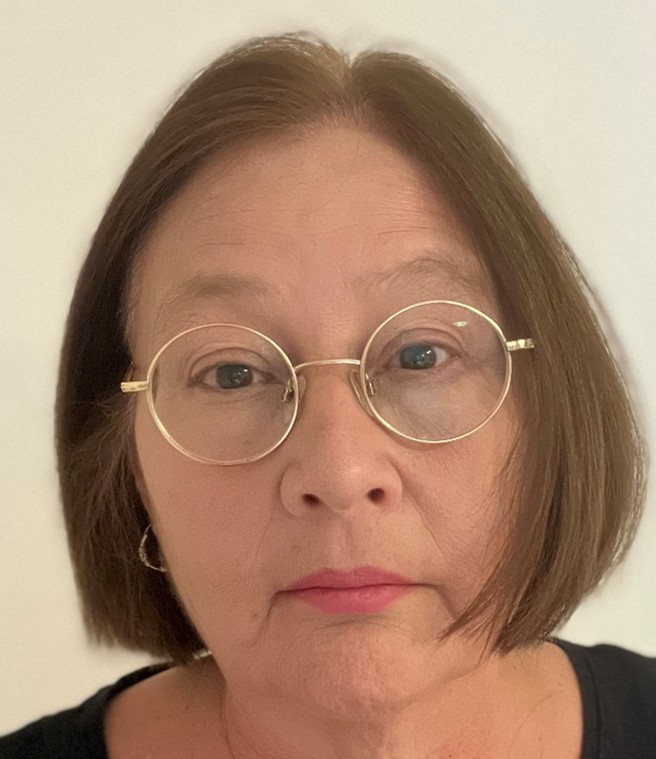
Wendy Luiten
Thermal Management in Advanced Package Designs: The Role of TIMs and Diamond Heat Spreaders | September 15, 2026, 9.00 am – 5.00 pm
Thermal management has emerged as a critical bottleneck for electrical performance and long-term reliability in 2.5D/3D integrated systems and heterogeneously integrated architectures. Addressing this challenge requires innovative materials and approaches to enhance heat-spreading efficiency and thermal integrity.
This course will begin by exploring the potential of synthetic diamond heat spreaders, whose unmatched thermal and mechanical properties make them a game-changer for advanced system-in-package (SiP) technologies. Participants will gain insights into how diamond can be integrated into SiP architectures, combined with microfluidics for synergistic cooling, and deposited directly using emerging low-temperature techniques. The course will also address key technical challenges and provide practical guidelines for successful implementation, enabling attendees to assess whether and how diamond can be leveraged in their specific applications.
A significant focus will be on thermal interface materials (TIMs), which play a pivotal role in device packaging. As power dissipation continues to limit the performance of modern electronics—from Si integrated circuits to high-power GaN devices—current TIMs, often relying on metals with thermal conductivities below 300 W/mK (and typically under 50 W/mK), are becoming a major bottleneck. The course will discuss the limitations of existing TIMs and propose innovative pathways for improvement, including the integration of high-thermal-conductivity materials like graphene and carbon nanotubes. While these materials offer theoretical in-plane thermal conductivities up to 5,000 W/mK, their practical implementation in composites has faced challenges, such as poor interfacial thermal conductivity. The course will highlight the potential of continuous graphite integration with metals via CVD, which could overcome these limitations and unlock new opportunities for high-performance TIMs.
By the end of the course, participants will have a comprehensive understanding of diamond’s role in thermal management, the current state and future of TIMs, and actionable strategies to advance thermal solutions in their own work.
Who should attend?
This PDC is ideal for packaging engineers, thermal designers, materials scientists, and students seeking to deepen their understanding of TIMs and diamond-based solutions for next-gen power components and advanced package designs.
Trainers: Joana C. Mendes, Christo Bojkov
Joana Catarina Mendes (ORCID: 0000-0001-9271-207X) is a researcher at Instituto de Telecomunicações, Aveiro, Portugal, with 25+ years of experience in artificial diamond and materials science. She holds a degree in Electronics and Telecommunications Engineering and a PhD in Physics from the University of Aveiro, specializing in the electrical and thermal properties of CVD diamond.
Her work focuses on integrating synthetic diamond into advanced packaging to solve thermal challenges in AI, HPC, RF, and power electronics, from optoelectronic devices to 3D heterogeneous architectures. Joana C. has led international R&D projects, authored 60+ peer-reviewed publications, and serves on the Steering Committee of WOCSDICE. She has chaired major IEEE workshops, including the 2023 and 2024 Signal and Power Integrity Workshops, and is as an active committee member at IEEE ECTC.
Christo Bojkov has over 36 years of experience in the semiconductor industry as Eng. Director and Senior technologist at multiple leading Integrated Device Manufacturers (IDM). He has managed large engineering groups in the Front End of line (FEOL) and back end of line (BEOL) FAB facilities with focus on heterogeneous integration of Cu interconnects, Pb-free Flip Chip, Cu- pillars with Cu-RDL, CSP Assembly and Test for high-power high-frequency GaN & GaAs mmWave products.
Christo began his career as a Research Fellow at the Universities of Paris (France), Rome (Italy) and at the Max-Planck Institute (Germany). He provides leadership activities as active committee member at IMAPS and IEEE/ECTC. Christo served as Adj. Faculty at the University of Texas at Dallas in Material science and engineering Department and Technical consultant at Center for Engineering Innovations (CEI). Christo received Dr. Eng. degree form Sofia Institute of Technology, and MS from Texas A&M University, College Station, TX in Thin films and Surface Science.
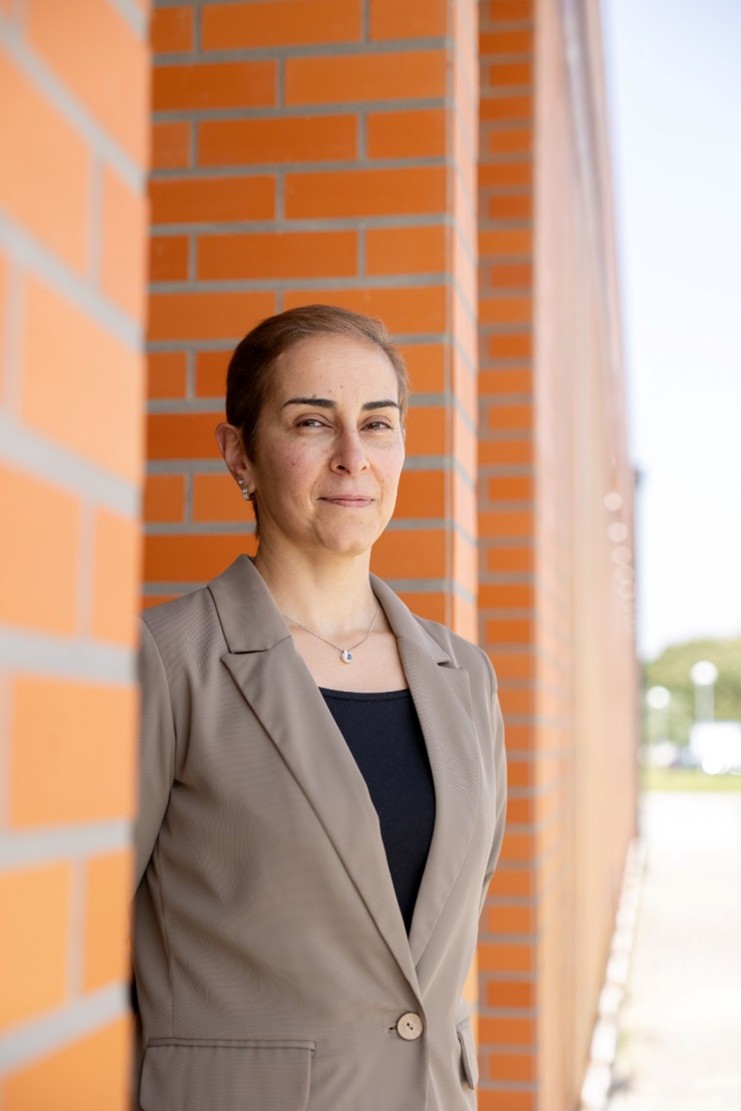
Joana C. Mendes
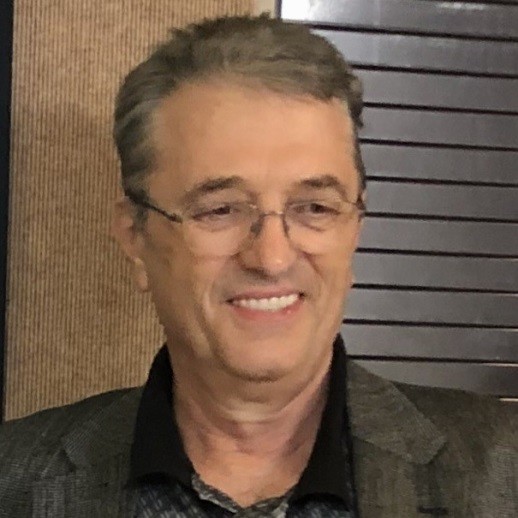
Christo Bojkov